
 Watch on YouTube
The follow-up interview, about 38 minutes. Watch the first interview.
See all interviews on the Sweat Venture channel
On this page
Perkins Roofing at a glance
Tim’s numbers
These are Tim’s own figures, as he stated them in the two interviews. They are not Sweat Venture estimates.
| Miami branch revenue | About $5 million a year |
|---|---|
| Jupiter branch, year 1 | About $1.5 million |
| Jupiter branch, year 2 | About $1.8 to $1.9 million |
| Jupiter branch, year 3 (expected) | About $3 million |
| Time to pay off Jupiter startup costs | About 6 months |
| Monthly fixed costs | About $120,000 in Miami; $23,000 to $24,000 in Jupiter |
| An $80,000 roof done at cost | Came out $18 off his estimate |
| Target margin for a new franchise | About 15% to 20% |
We have not verified these figures, and your market will differ.
Their path
- Before roofingTeacher
A summer job doing repairs for $15 an hour.
- That summerBuilds the systems
His father-in-law asks him to stay.
- 2023Opens Jupiter
The first branch outside Miami.
- 2025Franchise ready
Manual, training videos, and franchise documents done.
How they started
Tim was a teacher with student loans. One summer he asked his father-in-law for work and did roof repairs for $15 an hour. At night, while the crew relaxed, he organized the company’s processes.
“I basically made my own job.”
Tim, at 29:08 in the interview
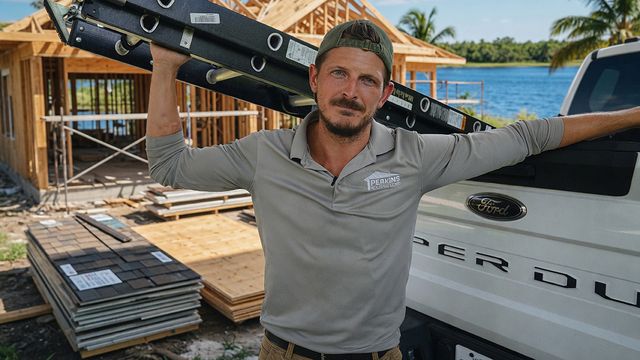
Perkins Roofing was founded by Dean Perkins more than 40 years ago in Miami. Tim is now the second-generation owner and president. He handles the big-picture accounting and estimates on larger projects himself.
At our first interview, he had just opened a branch in Jupiter. He planned it on paper first, came in with zero customers, and says it paid off its startup costs in about six months.
First equipment
Tim built a spreadsheet over 10 years ago that tracks labor, materials, and overhead on every job, every day. He divides monthly fixed costs by about 20 work days, then splits that by how much of the crew is on each job. Three office staff each update one column daily.
He says he knows on any day whether a job is making money and when to ask for a progress payment before doing more work.
The business today
Tim sees more homeowners choosing metal over tile. His rule: staying less than 10 years, get shingles; staying longer, get metal.
One commercial job in Jupiter swaps tile for aluminum standing seam on three buildings, about 290 squares. Aluminum, because a saltwater river runs next to it. The city reviewed five colors to keep the Mediterranean look.
Pricing
Tim offers good, better, and best options instead of one low number. He says vague quotes hide what you’re buying, so homeowners should compare the same materials line by line.
“A lot of contractors out there don’t even really know their numbers.”
Tim, at 12:45 in the interview
He says pricing by the square can lose money on cut-up custom roofs. He once did an $80,000 roof at cost for a military veteran, and after the accounting, the estimate was off by $18.
Re-roofs come with a 10-year workmanship warranty, and repairs get one year.
Finding customers
Most leads come from Google, and Tim asks every finished customer for a review. His YouTube channel answers common questions, so customers feel they know him before he arrives.
He always goes to the property, walks the roof, and checks the attic. Customers often tell him he was the only roofer who showed up instead of quoting from the office.
Florida helps: roofing runs all year, and insurers often require a new roof once it reaches 20 years.
Mistakes and what they would do differently
Tim says many competitors have sold to investors, and the new owners don’t know the trade. He keeps his own people by paying at or above market, treating them well, and taking them on a yearly company trip.
Advice for new owners
Comments
No comments yet. Log in to be the first.