
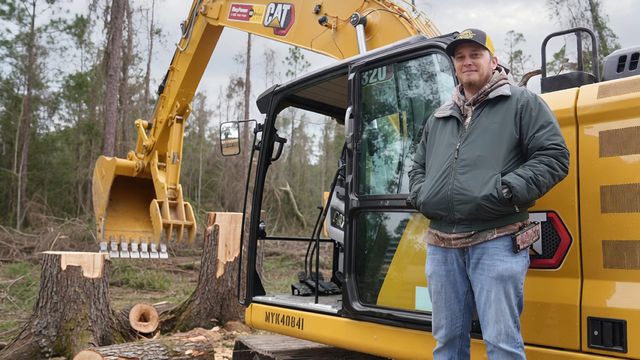
The first interview, about 33 minutes, filmed on a 16-acre clearing job. Watch the follow-up interview.
See all interviews on the Sweat Venture channel
On this page
Mustard Seed Land Maintenance at a glance
Thomas’s numbers
These are Thomas’s own figures, as he stated them in the two interviews. They are not Sweat Venture estimates.
| Years at the county parks department | About 8 and a half |
|---|---|
| His first job price | $1,200 to clear a quarter-acre lot |
| Price another operator charged builders | About $1,500 a quarter acre |
| Work he lined up in a month while still employed | About $15,000 |
| Skid steer rental for that month | About $5,000 |
| Skid steer rental by the day | About $400 |
| What he charges to run it | About $1,000 to $1,200 a day |
| Basic liability insurance | About $2 million of coverage, a couple hundred dollars a month |
| Cost of a new skid steer with a mulching head | About $150,000 |
| Dump trailer he financed | About $15,000 |
| Fence price, in his example | About $24 to $25 a foot for a 6-foot privacy fence |
| His best and worst weeks | Up to $10,000 made, and up to $10,000 lost |
We have not verified these figures, and your market will differ.
Their path
- BeforeSales, then the parks
He did outside sales for about four years, then spent nine years in county parks.
- Feb. 14, 2023Mustard Seed starts
He worked weekends and his day off while keeping his job.
- Early 2025Full time
He left the parks job the week of the first interview.
- May 2026The follow-up
Tree work and fencing, one financed dump trailer, and higher prices.
How they started
Thomas spent about eight and a half years with his county parks department. He ran equipment, cut trees, and built fence, and he loved it. His family joked that he got paid to be a redneck. But with a wife, two kids, and a third on the way, it did not pay enough.
He and his wife started the business on Valentine’s Day, 2023. He kept his job, which ran four 10-hour days, and worked the business on the other three.
Getting the first job was the hard part. He called every builder whose number he could find in job site boxes and emailed lists of builders. Nobody called back. Then he noticed a small crew clearing a quarter-acre lot across the street from his house. He walked over after dinner and asked for advice.
The man was a home remodeler who did some land clearing. He asked what Thomas would charge, then hired him for his next lot. The day after Thomas finished it, the man called with five more.
“I just got to go do it.”
Thomas, on walking over to the crew across the street, at 5:27 in the interview
First equipment
Thomas owns a truck and a trailer. Everything else, he rents. The sandy soil in his area lets a skid steer pull most trees on small lots.
He sees debt as risk. A rental means fixed costs, no repair bills, and fast service when something breaks. When the work runs out, he returns the machine. He also picks the right machine for each job, instead of pushing an owned one past its limits to cover a payment.
“You’re going to put $150,000 of risk into something that may or may not work.”
Thomas, on buying a new machine to start, at 30:17 in the interview
By the follow-up, he had financed one dump trailer for about $15,000, which he calls a moment of weakness. He had been renting one often. In two months it paid for itself many times over, partly because he rents it out as a dumpster. He says he will not finance a skid steer while his family is trying to qualify for a loan to build a house.
The business today
By the follow-up, land clearing had slowed, and his work was split between trees and fencing. He wants to grow the fencing side. With fence, competing bids are usually within a dollar a foot. With trees, one quote might be $3,000 and another $800.
He works mostly alone, with friends who help on their days off. If a friend uses a sick day or vacation day to help, he pays a little extra. He and his wife alternate work days so they can care for their three young kids without daycare.
His biggest change was qualifying leads on the phone. He used to drive out to every caller. Most were not ready to spend money. Now he asks about timing and budget first.
Pricing
Thomas charged $1,200 for his first quarter-acre lot, because he had read that someone else charged builders $1,500. He thought he was making money until insurance came due, a truck tire blew, and the trailer needed work.
Around the sixth or seventh job, he realized he was not making money and started raising prices slowly. He was honest with builders about being new. One told Thomas what he had been paying, and Thomas offered a little less. That builder became one of his best clients.
When he underbids in the middle of a job, he calls the customer and tells them. He dreads it every time. Often they say they wondered why he was so cheap.
“The point of business is not to get work. Point of business is to make money.”
Thomas, at 11:59 in the interview
Finding customers
Thomas says he has spent thousands of dollars on Facebook ads, Google ads, and local podcast ads, with almost nothing to show for it. Most of his work comes from word of mouth.
He gives a Mustard Seed hat to almost every customer. People ask what Mustard Seed is, and that starts a conversation.
Builders mostly prefer text. He asks each one how they want to be contacted. Bad news, like asking for more money, he always delivers by phone.
His other habit is calling customers back a week or two after a quote. Sometimes they were about to hire someone else.
Mistakes and what they would do differently
Thomas says he has grown slower than he could have. Fear is part of it. Some weeks he made $10,000, and some weeks he lost $10,000.
“Only you can make the decision whether you want to pay that price of admission.”
Thomas, on what he tells people who ask about starting, at 32:00 in the interview
Advice for new owners
Comments
No comments yet. Log in to be the first.