
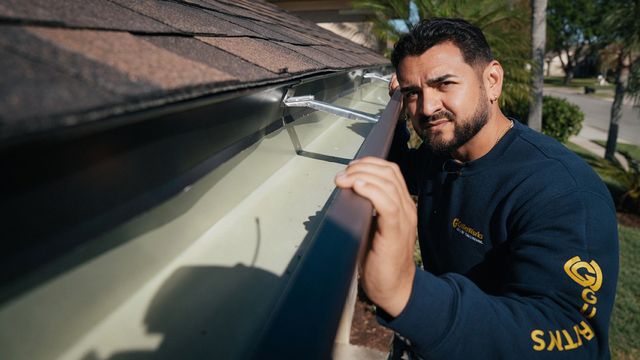
 Watch on YouTube
The full interview, about 28 minutes.
See all interviews on the Sweat Venture channel
On this page
GutterWorks at a glance
Ruben’s numbers
These are Ruben’s own figures, as he stated them in the interview. They are not Sweat Venture estimates.
| Years in business | Nearly 20 |
|---|---|
| Weekly revenue | About $50,000 to $80,000 |
| Team | 20 people in-house |
| Margin on 6-inch gutters | About 20% to 30% |
| Biggest projects | Up to about $800,000 |
| Two-person crew on a commercial job | About 550 to 600 ft. a day |
| Gutters on a 2,500 sq. ft. home | About $3,500 |
| Longest-tenured employee | 7 years |
We have not verified these figures, and your market will differ.
Their path
- Age 15A young dad
Works in landscaping.
- Joins the family businessPaper and pencil
His father’s gutter company had no systems.
- 2017Sells his landscaping company
Goes all in on gutters.
- Last 2 yearsShifts to homeowners
Stops being the middleman for roofers.
How they started
Ruben became a father at 15. He ran a landscaping business while his father ran a gutter company that was all paper and pencil, with no English in the office. Ruben saw a chance to grow it with better service.
He sold his landscaping company in 2017 to focus on gutters. He says landscaping taught him to overcommunicate with customers and understand drainage, which now ties into the downspouts.
He tried about a year of college, then decided business would teach him more.
First equipment
Ruben says someone starting with gutter cleaning needs only a ladder, a scoop, a bucket, a car, and liability insurance.
Installing gutters takes more knowledge: the roof type and pitch, the right gutter size, and how many downspouts each section needs.
The business today
The company covers Central Florida with 20 in-house people and some outside contractors. It has done multifamily projects of 20 to 100 buildings, worth up to about $800,000.
“It’s the same process whether it’s this one house or that 80-building community.”
Ruben, at 8:01 in the interview
Pricing
Ruben says 6-inch gutters earn about 20% to 30%. Commercial and specialty gutters vary more, and competition is pushing prices down, especially from companies without workers’ comp and liability insurance.
For big jobs, he plans by how much a crew can install per day. Two people can do about 550 to 600 feet of gutter and downspout on a commercial building.
He sells on value. Gutters for an average 2,500 sq. ft. home cost about $3,500 and last about 20 years. Without them, water can damage the foundation, paint, windows, and a $15,000 AC unit.
Finding customers
For years, most work came from roofers who hired GutterWorks after a roof job. Ruben says the middleman never makes the money he should, so he stopped working for contractors and went straight to homeowners.
He follows a sales process: a discovery call, engagement, the install, then follow-up. Leads come from word of mouth, Google, Facebook, and an affiliate program that pays a cut of each job.
The team meets monthly and tracks mistakes, wins, and reviews.
Mistakes and what they would do differently
Ruben keeps people by involving them in decisions, holding company outings, and paying fairly. He says people who leave often come back.
Advice for new owners
Comments
No comments yet. Log in to be the first.