
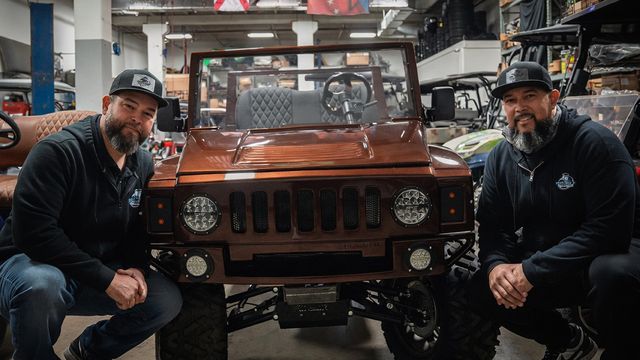
The full interview, about 37 minutes.
See all interviews on the Sweat Venture channel
On this page
Reliable Golf Carts at a glance
Jose and Albert’s numbers
These are Jose and Albert’s own figures, as they stated them in the interview. They are not Sweat Venture estimates.
| Years in business | 13 |
|---|---|
| Years before their first shop | About 3, starting in 2016 |
| Trade-ins they take | From about $1,000 |
| A custom build | About $7,500 to $30,000, sometimes up to $40,000 |
| Lithium battery life | About 10 to 11 years, versus 3 to 4 for lead acid |
| Weight saved with lithium | About 300 pounds |
| Top speed of their race carts | About 75 to 78 mph |
| A factory replacement motor | About $2,500 |
We have not verified these figures, and your market will differ.
Their path
- Early daysFast cars, then carts
They built fast cars before a golf cart owner asked for a speed upgrade.
- NextWorking for cart shops
One handled service and diagnostics, the other handled sales.
- 13 years agoOne van, one canopy
Mobile repairs from Miami north, with a concrete pad as the shop.
- 2016Their first shop
Business jumped once they had a real location.
How they started
Jose and Albert worked on cars, then a friend brought them into his golf cart shop. One was strong at service and diagnostics, the other at sales. They worked for a few cart companies, and when the last one closed, they opened Reliable Golf Carts.
They started with one van doing mobile repairs from Miami north. Anything they could not fix on the road went back to a concrete pad behind their parents’ house, under a canopy they had to replace after every storm.
After about three years, in 2016, they moved into their first shop. Leaving almost no overhead was hard, but they call it the best decision they ever made.
First equipment
They built their name on knowing what is inside a cart, wire by wire. They took classes, and they train every worker. They say anyone can put a new body on a cart, but few people understand the wiring.
The business today
Their showroom is small on purpose. They sell few new carts and focus on hands-on work.
After recent hurricanes, they built kits to bring flooded carts back to life. A new drive system costs far less than replacing every factory part, so owners do not have to junk a cart worth $9,000 to $10,000.
They say there is room for new cart businesses. People use carts for school drop-offs, groceries, property maintenance, security, and storage yards.
Pricing
A custom cart can run from about $7,500 to $30,000, depending on what the customer wants. They take trade-ins from about $1,000 and build carts up to $30,000 to $40,000.
They say the warranty matters as much as the price. They offer an in-house warranty, plus an extended warranty that covers repairs at other shops if a customer travels.
Lithium is the biggest change they have seen. It lasts about 10 to 11 years instead of 3 to 4, needs no water, and saves about 300 pounds.
“You’re buying an investment.”
Jose and Albert, on a $3,000 battery, at 22:11 in the interview
Finding customers
Word of mouth brings most of their work. They do not ask for reviews. They answer questions on the phone, even when a caller is not buying, and stand behind every part they sell, whether or not a failure was their fault.
Snowbirds are their biggest customers. Before those owners head north for six months, the team explains how to store and charge the cart.
Racing proves they know speed. Their race cart won its bracket at an event in South Carolina, against about 55 carts. They also bring custom carts to car shows.
They stay friendly with other cart shops. They send customers to each other, share parts, and call each other with diagnostic questions.
Mistakes and what they would do differently
One brother is cautious and the other takes risks. They say that balance is what makes them work.
Advice for new owners
Comments
No comments yet. Log in to be the first.