
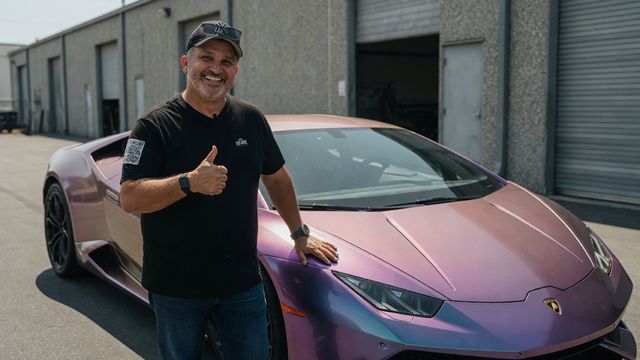
 Watch on YouTube
The full interview, about 41 minutes.
See all interviews on the Sweat Venture channel
On this page
Just Wraps at a glance
Ray’s numbers
These are Ray’s own figures, as he stated them in the interview. They are not Sweat Venture estimates.
| Years wrapping | Nearly 18 |
|---|---|
| First shop | A 1,300 sq. ft. bay |
| Shop today | 7,000 sq. ft. |
| Sons in the business | 8 or 9 years |
| Food truck turnaround | 3 to 4 days, including prep |
| Good freelance installer income | About $50,000 to $100,000 a year |
| Time to get good at wrapping | About a year |
| States he worked as a freelancer | All but North and South Dakota |
We have not verified these figures, and your market will differ.
Their path
- Before 2008Mortgage and appraisal
His wrapped Hummer brought in calls everywhere.
- After the crashLearns to wrap
Then travels the country as a freelance installer.
- LaterOpens Just Wraps
Only wraps, starting in a 1,300 sq. ft. bay.
- Today7,000 sq. ft.
With his sons, and new locations planned.
How they started
Before 2008, Ray owned a mortgage company and a real estate appraisal company. He had his Hummer wrapped, and it brought in calls wherever he parked it.
When the market crashed, he wanted a new product he believed in. He took a two-day design course and a two-day install course, and he says install came naturally.
He worked as a freelance installer, traveling to every state but North and South Dakota, often doing gas station graphics. He saw shops using cheap material and wrapping in dirt lots, and that led to his slogan: wraps done right.
First equipment
Ray says an installer needs only a heat source, a squeegee, and a knife, and that the cheap kits sold online are mostly junk. The skill is the hard part.
His shop uses only premium 3M wrap vinyl, which he says lasts longer.
The business today
Ray does sales and runs the business. A designer creates each design. Once it’s approved, it’s printed, laminated, trimmed, and installed. A food truck takes three to four days, including a day of prep.
“A wrap is a billboard on wheels.”
Ray, at 8:53 in the interview
He says you have about three seconds to tell people who you are, what you do, and how to reach you.
Pricing
Ray prices design separately from material and installation. Install is priced by square foot, with a rate that changes by how hard the vehicle is to wrap. A flat trailer goes fast, while one bumper can take half a day.
That’s why a small car can cost more than a big trailer. He doesn’t give quick ballpark quotes, because a low guess can feel like a bait and switch later.
Finding customers
Most of his work comes from repeat customers and referrals. A food truck owner who does well often comes back for a second truck.
Customers see a design mockup but aren’t allowed in the shop during the job. When it’s done, the team rolls it out through the garage door for the reveal.
Ray has turned away only one customer, refunding her because her design request would have hurt her brand.
Mistakes and what they would do differently
He says shops often see reviews dip when their best installer leaves. His installers stay because he pays and trains them well, and his sons are invested in the business.
Advice for new owners
Comments
No comments yet. Log in to be the first.