
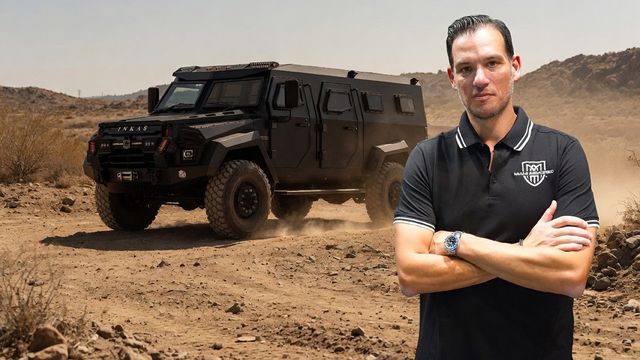
 Watch on YouTube
The full interview, about 29 minutes.
See all interviews on the Sweat Venture channel
On this page
Miami Armored at a glance
Philip’s numbers
These are Philip’s own figures, as he stated them in the interview. They are not Sweat Venture estimates.
| Years with the company | About 20 |
|---|---|
| Vehicles built per month | About 60 |
| Factory space | About 550,000 sq. ft. |
| Employees | Close to 200 |
| Countries Philip has visited for work | More than 43 |
| Share of sales to protection services | About 30% |
| Used vehicles they’ll armor | Up to about 4 to 5 years old, under 45,000 miles |
| Engineering time on a new model | About 3 months before production |
We have not verified these figures, and your market will differ.
Their path
- Mid-1990sCash transport company
Like an armored car service.
- Around 2004Builds its own armored vehicles
Clients kept asking for them.
- About 20 years agoPhilip joins
He helps grow the company.
- After the pandemicThe U.S. becomes a top market
Now its third largest.
How they started
The parent company started in the mid-1990s moving cash, like an armored car service. Clients kept asking if they sold armored vehicles. Rather than resell someone else’s product, the company’s engineers began building their own around 2004.
Philip joined about 20 years ago and helped grow it into what he says is the largest armored vehicle maker in North America. He loves sales and has traveled to more than 43 countries for the work.
First equipment
Philip says the factory does everything in-house: laser cutting, brake presses, milling hinges, and even building and upholstering limousine seats. Armor materials are tested in-house and by an outside lab.
A new model sits with engineers for about three months of scans and fittings before production.
The business today
The factory builds about 60 vehicles a month. Most ship overseas in containers, and some are flown in when clients need them fast.
Philip says buyers used to be governments, executives, and the wealthy. Since the pandemic, the U.S. has become their third largest market, and buyers now include athletes, entertainers, and everyday drivers.
Pricing
Philip didn’t give prices. He says a new vehicle is best for a startup protection company, because a used one may have hidden damage.
For a lower-cost start, they’ll armor a customer’s vehicle if it’s a model they already have a design for, no more than four or five years old, and under about 45,000 miles.
A damaged vehicle can often be repaired, since glass is replaceable.
Finding customers
Philip says they listen first, learning what threats a client wants to avoid before recommending a vehicle. Many buyers fear for their lives, so trust matters.
Every buyer is vetted before a sale. Despite heavy marketing spending, he says most clients come by word of mouth.
“Your job’s not done until that client is ready to purchase another vehicle.”
Philip, at 24:00 in the interview
Mistakes and what they would do differently
Many protection company founders he sees are veterans or retired police officers.
Advice for new owners
Comments
No comments yet. Log in to be the first.