
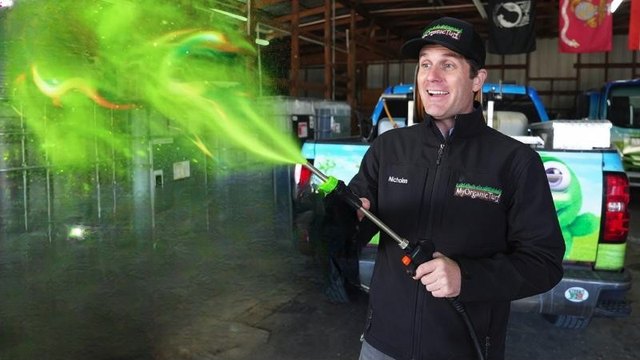
The full interview, about 28 minutes.
See all interviews on the Sweat Venture channel
On this page
My Organic Turf at a glance
Nicholas’s numbers
These are Nicholas’s own figures, as he stated them in the interview. They are not Sweat Venture estimates.
| Year he started | 2019, from his garage |
|---|---|
| Size after about six years | 10 trucks and thousands of customers |
| His price for the first 1,000 square feet | $60, versus about $50 industry norm |
| Tree injections | From about $125, by species |
| A full spray truck | About $125,000 |
| Truck number two | Traded for a Rolex he had won in sales |
| Pest control companies in Tampa, by his count | About 1,500 |
| Florida license requirement | About 4 years of experience and 150+ hours of application |
We have not verified these figures, and your market will differ.
Their path
- BeforeCopier and roofing sales
He sold copiers for five years, then managed national sales for roof underlayments.
- 2019Fired, then started
A blog, a backpack sprayer, the family pickup, and his neighbors.
- GrowthA rig, then spray trucks
He traded a Rolex for truck two and financed the rest.
- RecentlyPrivate equity partner
My Organic Turf joined Fairway Lawns. He still runs routes.
How they started
Nicholas sold copiers for five years, then became a national sales manager for roof underlayments. When he was fired, he had to learn to swim quickly.
He had always been interested in farming and permaculture, and he saw lawns as a crop nearly everyone grows. He started with a blog about organic lawn care, then began spraying his neighbors’ lawns on weekends.
“I started out of my family pickup truck with a backpack sprayer.”
Nicholas, at 11:22 in the interview
He says his copier years prepared him. Cold calling alone, with his job always on the line, was a lot like the early days in the truck.
First equipment
When he hit capacity in truck one, he stopped at a roadside car lot. The dealer wore a Rolex, and Nicholas had one at home that he had won as a sales manager of the year. He traded the watch for the truck. He financed every truck after that.
The business today
The program is a hybrid. He says there is no good organic weed killer that spares the grass yet, so customers who want no weeds get some traditional herbicide, applied by hand if they choose. He uses an organic pre-emergent, which he calls a game changer.
Many customers seek him out, especially pet owners and young parents. His wrapped trucks get his techs stopped with questions on the job.
Pricing
Lawn care is priced per 1,000 square feet, with a set charge to bring out the truck. He charges $60 for the first 1,000 square feet, above the roughly $50 industry norm, because organic certified products cost more. Tree injections start at about $125, depending on the species.
Nearly all of his revenue is recurring. He only wants recurring work.
“My model is sales-driven, recurring revenue, and it’s route-based.”
Nicholas, at 25:02 in the interview
Finding customers
Nicholas says reviews can make or break a small business. He knows each of his few bad reviews by name. His team answers the phone right away and jumps on lawn problems fast, because people are fanatical about their lawns.
In the early days, he put his sign in front of Starbucks at 4 or 5 in the morning and hung door hangers at night. He knocked doors with no logo, no company name, and an unwrapped truck.
Branding matters in a crowded market. By his count, Tampa has about 1,500 pest control companies.
Mistakes and what they would do differently
Nicholas says the sale took months of due diligence and felt like an audit. His CPA’s firm kept his books and sent monthly statements, so the numbers were ready. Buyers want professionally kept books, not owners doing their own.
He says Fairway Lawns chose My Organic Turf for its brand and reputation. He is still in the field, still takes the truck home, and still talks with customers.
Advice for new owners
Comments
No comments yet. Log in to be the first.