
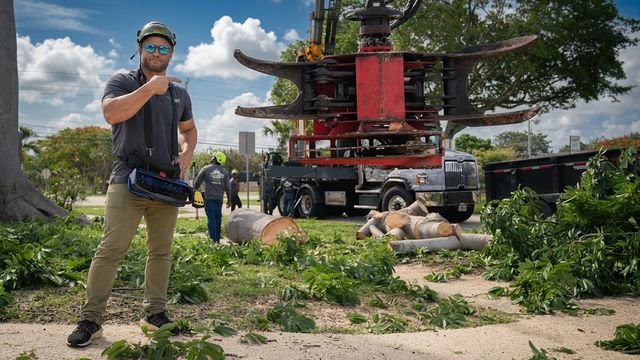
 Watch on YouTube
The first interview, about 31 minutes, filmed on a removal job. Watch the follow-up interview.
See all interviews on the Sweat Venture channel
On this page
Tree Jaws at a glance
Mitch’s numbers
These are Mitch’s own figures, as he stated them in the two interviews. They are not Sweat Venture estimates.
| Saved from about 4 years of trucking | About $100,000 |
|---|---|
| His first grapple truck | $145,000 used, with $50,000 down |
| A new grapple truck | About $300,000 |
| Gross sales at the first interview | About $30,000 to $35,000 a week |
| Monthly revenue then | About $120,000 to $140,000 |
| Marketing spend then | About $20,000 a month |
| Crane upgrade | 45 ton to 65 ton, about 112 feet of reach |
| Leads that need the grapple saw | About 1 in 10 to 1 in 20 |
We have not verified these figures, and your market will differ.
Their path
- About 2014Arrived from Serbia
Within months he was an owner-operator, driving semi trucks across the country.
- About 2019Debris grapple truck
He hauled curbside debris for tree services and landscapers.
- About 2020Grapple saw truck
Then he sold the debris business to focus on trees.
- 2026Bigger crane, profit mode
He upgraded to a 65-ton crane and slowed growth to build profit.
How they started
Mitch came to the US from Serbia about 10 years before our first interview. A trucking company owner liked his work so much that, about six months in, he set Mitch up as an owner-operator. For about five years, Mitch drove all over the country, often living in the truck, and saved about $100,000.
He wanted to stay in South Florida and sleep at home, and the only skill he had was running big machines. So he bought a used grapple truck for $145,000, with $50,000 down, to haul curbside debris.
“I had that truck parked for two months straight. I couldn’t find one job.”
Mitch, at 7:57 in the interview
He went farm to farm where landscapers and tree services dumped their debris, and asked for a chance. Showing up on time won repeat work fast. Hauling for tree services taught him their business, and he decided trees could scale better than debris.
First equipment
No one in South Florida had a grapple saw truck, and other tree owners told him it would not work there. He took out another loan anyway. The debris truck paid for both trucks until the tree work picked up.
A full tree service also needs chippers, a bucket truck for climbers, a stump grinder, and a skid steer. He later sold the debris business so fewer of his trucks need a CDL driver.
In the follow-up, he had moved from a 45-ton to a 65-ton crane, with 10 to 12 more feet of reach. At about 65,000 pounds, the truck can still back into a driveway without cracking it and reach over a house.
The business today
At the follow-up, Mitch said he had shifted from growth mode to profit mode after growing fast for a few years. Two office staff and his best friend from Serbia handle the office and the numbers, so Mitch can sell jobs and run the grapple saw truck.
He tells the crew every morning: no one gets hurt, and nothing gets damaged. Money comes after that.
Pricing
Mitch starts with what other companies charge, so he does not leave money on the table. Then he weighs the liability. Jobs where a lot can go wrong either get turned down or priced high enough to do slowly and safely.
Because his truck works so much faster, he can price a little below others on big removals and still do well.
His fixed costs are high: truck loans, insurance, liability, workers’ comp, and a yard to park it all. Those costs keep running even when the trucks sit still. Rising costs get passed on to customers, though his older loans locked in lower rates.
“There is so much expenses when you run a tree service.”
Mitch, at 8:12 in the interview
Finding customers
At the first interview, Mitch spent about $20,000 a month on marketing. He tracks every lead by source, his cost per lead, and his cost per customer, instead of trusting the numbers ad companies report.
He likes mailers because they bring in quotes clustered in one zip code, which makes routes tighter.
In the follow-up, he said only about 1 in 10 to 1 in 20 paid leads needs the grapple saw, and that is where he makes his money. He expects AI search tools to change how customers find tree services. He is building a YouTube channel so people can see his crews really do the work.
Mistakes and what they would do differently
Mitch is a natural introvert. He says he had to learn to sell jobs, network, and manage his temper to lead a crew.
Advice for new owners
Comments
No comments yet. Log in to be the first.