
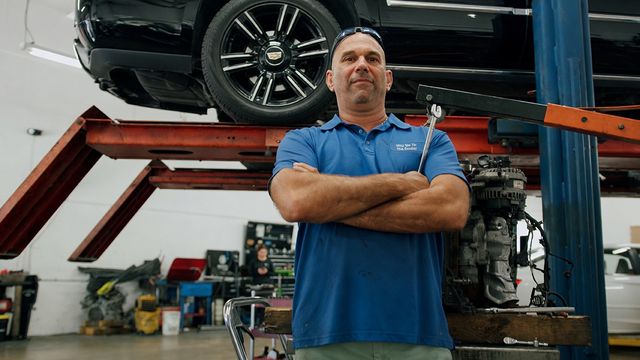
 Watch on YouTube
The full interview, about 16 minutes.
See all interviews on the Sweat Venture channel
On this page
Why Go To The Dealer at a glance
Mark’s numbers
These are Mark’s own figures, as he stated them in the interview. They are not Sweat Venture estimates.
| In business since | 2004 |
|---|---|
| His labor rate | $140 an hour |
| Nearby dealer’s rate, as he cited it | About $195 to $210 an hour |
| Rate when customers bring their own parts | $155 an hour |
| A good scan tool | About $10,000 to $15,000 |
| Rest of the tools | About $100,000 |
| The shop overall | Over $200,000 |
| A 1952 Bentley restoration | About $200,000 from the owner |
We have not verified these figures, and your market will differ.
Their path
- High schoolFlips cars
Told he wasn’t qualified to fix them.
- After collegePolice officer, then restaurants
A friend’s repair bill changes his mind.
- ThenTrade school
Works for others and learns the business.
- 2004Buys a shop
Renames it Why Go To The Dealer.
How they started
Mark flipped cars in high school, but his school said he wasn’t qualified to fix them. He went to college, became a police officer, and ran restaurants. When a friend told him he made $100 fixing Mark’s car in under an hour, Mark went to trade school in Connecticut.
He worked in the industry, and one boss took him under his wing and showed him how to run a business. After moving to Florida, he bought an existing repair shop in 2004 and renamed it.
First equipment
Mark says the rest of the tools run about $100,000, and the shop overall is over $200,000. It takes time to build up, so you start somewhere.
Newer cars use a refrigerant that needs a $15,000 machine, compared with $3,500 for the older type.
The business today
He added body work around 2007 or 2008, starting with a 1952 Bentley restoration. He avoids some electrical work on certain luxury brands after losing money on it.
Pricing
Mark’s labor rate is $140 an hour, compared with about $195 to $210 at a nearby dealer. On a seven-hour job, that adds up.
“My parts pay my overhead.”
Mark, at 15:12 in the interview
If customers bring their own parts, he charges $155 an hour, because the shop makes part of its money on parts.
Finding customers
When he bought the shop, he dropped the previous owner’s customers, who often wanted to pay later. Instead, he called the people he’d done side work for at the dealership, and word spread.
He says he never buys reviews and answers every one. When a customer posted a fake bad review after refusing to pay for a diagnosis, the review site removed it.
Mistakes and what they would do differently
Mark says hiring is very hard in this field. He pays well and gives his crew weekends off.
Advice for new owners
Comments
No comments yet. Log in to be the first.