
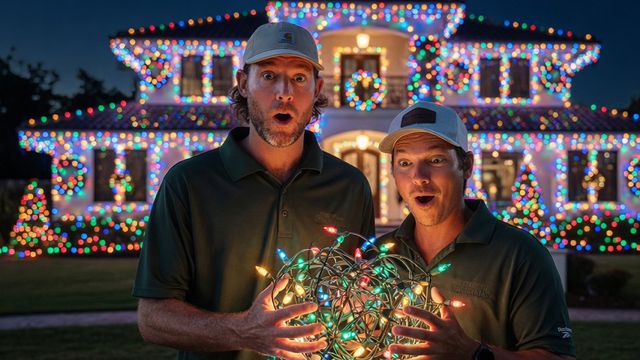
 Watch on YouTube
The full interview, about 41 minutes, filmed in WaterColor, Florida.
See all interviews on the Sweat Venture channel
On this page
Gulf Coast Christmas at a glance
Josh and Joel’s numbers
These are Josh and Joel’s own figures, as they stated them in the interview. They are not Sweat Venture estimates.
| Year they started | 2011, at about 20 and 21 |
|---|---|
| Roofline price now | About $5 a foot |
| Install days a season | About 70 to 80 |
| Takedown days | About 30 to 35 |
| Homes they can do in a day | Up to about 17 |
| Commercial share | About 30% of clients, about half of revenue |
| Lift rental they replaced | About $300 a day |
| Their first orchard ladder | About $1,000 with shipping |
We have not verified these figures, and your market will differ.
Their path
- 2011Beach chairs and lights
Summers renting beach gear, winters hanging lights.
- Next 9 or 10 yearsLandscaping too
It paid the bills but clashed with the light season.
- LaterLights only
They dropped landscaping and took a pay cut for more time.
- NowA 3,000-square-foot shop
Up from a 10-by-10 storage unit.
How they started
Josh and Joel grew up in Georgia. In college, Josh spent a summer on the Florida Gulf Coast renting beach chairs and umbrellas, and made good money. Joel’s brother managed a Christmas light company back home, and Josh worked one season for him.
In 2011, the two moved to the coast together: beach service in summer, Christmas lights in winter. They also ran a landscaping company for about nine or 10 years, until it kept pulling them away from lights in October.
“We are the only company that I know of around here that do only Christmas lights.”
Josh and Joel, at 9:40 in the interview
First equipment
An orchard ladder, a three-legged ladder that sets into bushes, cost about $1,000 with shipping. They call it a must for trees.
Renting a lift cost about $300 a day and forced them to finish every lift job within the rental week. Financing their own was cheaper, and they call it the best thing they ever bought.
LED lights made the work easier. With old glass bulbs, one dead bulb could cost an hour of hunting in a tree.
The business today
They skip wreaths, garland, and indoor decorating on homes. Garland cannot go up in September, so it would mean a second trip.
Commercial clients are about 30% of their clients but about half their revenue. Larger commercial jobs often require three bids, which takes longer to close.
Pricing
They started at under $2 a foot on the roof and lost money for the first couple of years. Now they charge about $5 a foot. They have raised prices only about twice, in big jumps.
They say they could charge $7 or $8 a foot but choose not to, so more people can afford lights. Prices also rise as you grow, with more workers and the insurance big commercial clients require.
On their first big shopping center job, the property manager told them their bid was too low and to add more. It took them seven days. Now it takes about two and a half.
“We were losing money.”
Josh and Joel, at 3:57 in the interview
Finding customers
For their first 10 or 12 years, they were the only Christmas light company in the area and never advertised. Word of mouth did the work, plus some cold calls to commercial properties.
Each July, they send past clients the same quote as last year. Clients sign and pay a deposit, and the schedule fills by mid-August. They stop taking new jobs around mid-October and keep a waiting list.
With new competitors arriving, they started paid Facebook ads, which brought in the most new clients. They also bought five billboards this year.
Mistakes and what they would do differently
They warn about courses that promise $100,000 in a month. Some new companies charge double, then never come back for takedown.
Advice for new owners
Comments
No comments yet. Log in to be the first.