
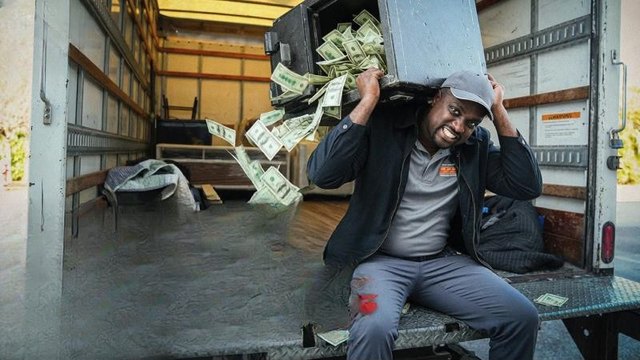
The full interview, about 22 minutes.
See all interviews on the Sweat Venture channel
On this page
George’s business at a glance
George’s numbers
These are George’s own figures, as he stated them in the interview. They are not Sweat Venture estimates.
| Age when he bought his first rental properties | About 25 to 30 |
|---|---|
| His first moving job | $500, for a home buyer he worked with |
| His first big job | A whole house for $1,500, with $750 profit in two days |
| That same job today, by his estimate | $4,000 to $5,000 |
| What he earned as a mover starting out | Almost $100 an hour |
| A small job he still takes | $150 to carry a couch upstairs |
| How close his phone quotes land | Within 20% |
| His starter budget for someone with nothing | Under $1,000: cards, ads, and a rental truck |
We have not verified these figures, and your market will differ.
Their path
- On his mail routePodcasts and properties
He bought rental properties along his route between about 25 and 30.
- NextReal estate full time
He left the post office and got his real estate license.
- First movesA pickup and a 10-foot trailer
A client needed movers, and he found friends to help.
- ThenBigger trailer, then a box truck
He grew one piece of equipment at a time.
How they started
George drove a mail truck for the post office. After a year of music, he switched to business and real estate podcasts. Between about 25 and 30, he bought rental properties on his route, and eventually bought enough to quit and work in real estate full time.
The moving business started by accident. A client who had just bought a house had no movers. George called a couple of friends, moved her out of her trailer and into her new home, and she paid him $500.
“That was almost better than the real estate commission.”
George, at 3:23 in the interview
His family has a history of running businesses, and George is the third George in the line. He says faith guided his decision to leave his job. He threw out his work uniforms the morning he decided.
His first big job was a whole house for $1,500. He made $750 profit in two days. He estimates the same job would cost $4,000 to $5,000 today.
First equipment
George says you do not need to start big. A truck and a trailer are enough, and you grow into bigger equipment. You can buy a box truck right away if you have the money, but most people are not yet sure the business will work.
The business today
He wants his company to be the Chick-fil-A of moving: uniforms, firm handshakes, and a professional look. He says many customers expect movers to be rough, and he wants to change that.
His company’s name, Pick Up and Delivery Moving, has a downside. People assume he only moves single pieces. So he now advertises jobs starting at $500 to reach customers moving whole homes, long distance, or businesses.
Pricing
George charges flat rates instead of hourly. Customers list their items or send photos, and he or his assistant gives a quote that lands within 20%. He says training someone else to quote by listening is one of his hardest tasks.
Flat rates can surprise customers when the crew finishes fast. On the job in the interview, he expected two hours for a whole apartment.
He still takes small jobs. Other movers told him they will not touch anything under $300. He says he did triple their revenue last year and still does $150 jobs.
During the interview, a woman living in a shelter called needing a move he would normally quote at $400 to $500. She had $100. He took the job.
“If you want your business to succeed, the more people you help, the more money you going to make.”
George, at 18:00 in the interview
Finding customers
Word of mouth comes first. George also uses Facebook and Google, logos on every truck, uniforms, and business cards in every mover’s pocket. He calls it a hurricane of marketing.
After every job, the customer gets a message asking for a five-star review. He says it works better when the movers mention the message before they leave, but they often forget once they get a tip.
Mistakes and what they would do differently
George says the people you hire become the business. If you want to grow, your employees represent you.
He does not post job openings. He tells his crew to watch for people who could add value, and offers them a spot when he finds one.
Advice for new owners
Comments
No comments yet. Log in to be the first.