
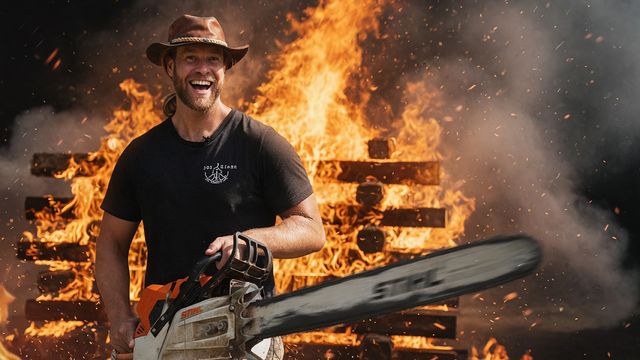
 Watch on YouTube
The full interview, about 38 minutes, filmed in Walton County, Florida.
See all interviews on the Sweat Venture channel
On this page
30A Blaze at a glance
Davin’s numbers
These are Davin’s own figures, as he stated them in the interview. They are not Sweat Venture estimates.
| Year he started | 2016 |
|---|---|
| Fires in year one | 42 |
| Fires in year two | Over 130 |
| Total fires, nearly 10 years in | Close to 10,000 |
| Five-star reviews | Close to 1,000 |
| Firewood used a year | About 42 cords |
| Wood mix | About 30% pine, 70% hardwood |
| Wind that cancels fires | Over 18 mph |
We have not verified these figures, and your market will differ.
Their path
- After the ArmyA beach chair job
Customers started asking for bonfires the chair company could not provide.
- 2016The first fire
His own old chairs, a permit, and his labor.
- Year one42 fires
He built his own profit and loss statement.
- Nearly 10 yearsAlmost 10,000 fires
Plus big bonfires for concerts.
How they started
Davin wanted to stay in the Army, but he separated and took a job at a beach chair service on the Florida Gulf Coast. Vacationers were learning they could have bonfires on the beach, and the chair company did not have the capacity.
He pulled a permit from the fire department and his vendor permit from the county. Then he built 30 chairs and bought a trailer. His wife came up with the name, 30A Blaze.
His first customer was a family from his chair route. He charged for the permit and his time. Watching the kids hunt crabs and roast marshmallows, he figured it could cover his truck payment. That customer still books with him almost every other year.
First equipment
Store-bought firewood was too expensive, so Davin makes his own. He takes logs from local tree services, which saves them dump fees. He cuts and splits about 42 cords a year and seasons it for two to three months.
His crew splits wood in the off season, which gives them winter work. He learned that lesson after two summers of splitting wood in the heat and working fires at night.
The ash goes to his father’s garden.
The business today
Each fire has an attendant who adds two logs every 15 to 20 minutes and checks on the group. The attendant sends a photo of the setup so customers find the right beach access. Afterward, the crew hauls away every chair, ash, and piece of trash.
Fires start with pine heart, the sap-rich core of fallen longleaf pines, plus straw. The mix is about 30% pine to get it going and 70% hardwood to burn long and safe.
Pricing
Davin did not share his prices in the interview. He did say the first year taught him to track everything. He built his own profit and loss statement and learned to act as accountant and human resources manager too.
“If you’re an entrepreneur, you’re all those things.”
Davin, at 9:26 in the interview
His costs include beach permits, firewood, insurance for bonfires, workers’ comp for every attendant, vehicle insurance, and equipment coverage. He shopped all over his first year to find an insurer willing to cover bonfires.
Finding customers
The first customers told their friends, and families who vacation together spread the word. A travel writer featured the business in Forbes.
After every fire, the team asks how it went, like an after-action review in the Army. Davin reads the one- to four-star feedback first, to see what was in their control. The business is close to its 1,000th five-star review.
Permits open at midnight. In season, Davin, his wife, and his manager set alarms for 11:55 p.m. and race to buy them, sometimes for two and a half hours.
Mistakes and what they would do differently
Wind over 18 miles an hour shuts down fires for the night, and rain delays are common. His policies protect the business, but he says there always has to be flexibility for the customer.
Advice for new owners
Comments
No comments yet. Log in to be the first.