
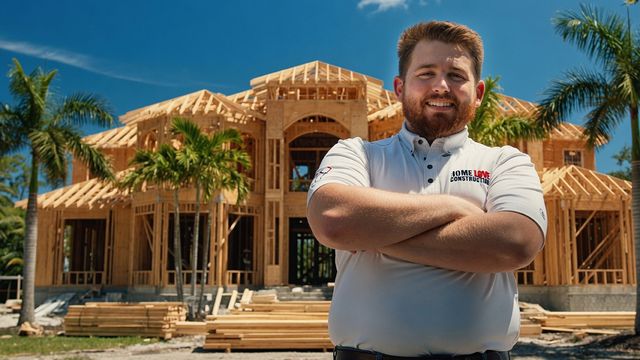
 Watch on YouTube
The full interview, about 30 minutes, filmed on a remodel.
See all interviews on the Sweat Venture channel
On this page
Home Love Construction at a glance
Brad’s numbers
These are Brad’s own figures, as he stated them in the interview. They are not Sweat Venture estimates.
| Estimators on staff | 6 |
|---|---|
| Discovery call | 30 minutes |
| Short videos shot a week | About 40 to 50 |
| Longer videos a week | 5 or 6 |
| Review goal | 10 five-star reviews per client |
| Framing crews tried before finding theirs | 10 to 20 |
| Years with that framing crew | 3 or 4 |
| Steel beam on the job we filmed | 50 ft., about 3,500 lbs. |
We have not verified these figures, and your market will differ.
Their path
- CollegeWest Point
Then the Army.
- After the ArmyJoins the family business
Instead of Wall Street.
- 2 to 3 years inGoes all subcontractor
His dad was right.
- About 18 months beforeBrings design in-house
To keep clients from dropping off.
How they started
Brad went to West Point and served in the Army. He planned to work on Wall Street, but when he got out, he chose to help with his family’s remodeling business.
“The biggest challenge was that I thought I knew everything and I didn’t know anything.”
Brad, at 4:03 in the interview
His dad let him try his ideas. Some worked, and some didn’t. Brad says West Point taught him to get work done through a chain of people, which matters on a job site with 100 or 200 people involved.
First equipment
Brad says “we’ll get back to you” is banned at his company. About a year and a half earlier, they brought design in-house because clients were dropping off when it was sent out. He says design doesn’t make much money, but it feeds new contracts, usually signed within two or three weeks.
The final rendering becomes a “visual contract” that the trades build to.
The business today
The job we filmed added a second story, raised ceilings from 8 to 10 feet, and needed a 50-foot steel beam to stiffen the house. Brad calls it their most challenging project and the most fun.
Most of their work is remodeling, because the Tampa Bay area has so many older homes.
Pricing
Brad says to never cut your price to win a job. Let the client shop around and come back.
He says contractors often leave no room for unforeseen problems. If material prices double and it isn’t in the contract, that’s the contractor’s problem, not the client’s.
Finding customers
Brad says the main way to win clients is getting in front of new people. His team shoots 40 to 50 short videos and five or six longer ones every week.
He tells his team not to dwell on bad reviews and to aim for 10 good ones for every bad one. Happy clients often post the same review on several sites.
Mistakes and what they would do differently
Finding good subcontractors is a numbers game, Brad says. They went through 10 to 20 framing crews before finding the one they’ve kept for three or four years.
Advice for new owners
Comments
No comments yet. Log in to be the first.