
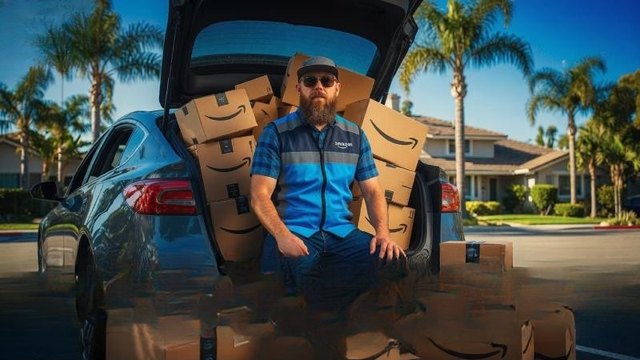
The full video, about 39 minutes.
See all interviews on the Sweat Venture channel
On this page
Amazon Flex at a glance
Our numbers
These are the figures from our own 30-day test near Orlando, as stated in the video. Pay varies by market and distribution center.
| Packages delivered | About 1,000 |
|---|---|
| A 3.5-hour block | About $70 to $80 |
| A 4-hour block | About $100 |
| Average pay in our market | About $25 an hour |
| Realistic weekly ceiling on Flex alone | About $400 to $500 |
| Our car’s fuel economy on routes | 25 to 28 mpg (2016 Mazda 3) |
| Mileage deduction rate cited | About 70 cents a mile |
| Packages in one afternoon block | 47 |
We have not verified these figures, and your market will differ.
Their path
- Sign upWait list and checks
There may be a wait list, then insurance and identity checks.
- Each blockCheck in at the warehouse
Arrive 15 minutes early to 5 minutes after the start, or lose the block.
- On the routeScan, drive, photo
The app builds the route; every drop needs a photo.
- After 30 daysOur verdict
Good fast cash, hard to make a full-time income.
How they started
Amazon Flex pays independent contractors to deliver packages in their own cars. Drivers claim blocks in the app: morning blocks can start at 3:30 a.m., afternoon blocks around 2:30 p.m., and evening blocks around 5 to 5:30 p.m.
New drivers may face a wait list, then verify their insurance and identity. Our driver says the official training is fine, but YouTube videos from experienced Flex drivers taught him the most.
At the warehouse, you check in, take a photo, and show your license. Then you scan your packages from a cart, and the app builds your route.
First equipment
A truck that gets 15 mpg pays about twice as much for gas as a car that gets 30. Our test car, a 2016 Mazda 3, averaged 25 to 28 mpg on stop-and-go routes.
You must accept that you can lift a 50-pound package. Only two or three of our first 1,000 were marked heavy.
The business today
Small habits add up over a three-hour block. Keeping packages organized means you open the back door once every 10 stops instead of searching at every house.
The app warns you when a house has a dog. It gives gate codes for gated communities, and some gates open from the app.
Pricing
Pay depends on how long Amazon expects the block to take, and on your market. Near Orlando, a 3.5-hour block paid about $70 to $80, and a 4-hour block about $100. We averaged about $25 an hour.
Unclaimed blocks can surge in pay over time. In busy markets, most blocks are claimed instantly, so most drivers work at base pay.
Track every mile. The mileage deduction, about 70 cents a mile, helps offset gas, wear, and insurance at tax time.
“If you’re just doing Flex, it would be really hard to make more than $400 or $500 a week.”
Our driver, at 13:08 in the interview
Finding customers
Getting blocks is the hard part in competitive areas. Learn when your distribution center releases them. At ours, many blocks for the week came out Friday around noon, and new blocks often appeared about 15 minutes before the hour.
“If a block presents itself, don’t think about it. Just accept it.”
Our driver, at 32:26 in the interview
You can drop a block without penalty up to 45 minutes before it starts. Take the block first and decide after, but do not drop too many.
Mistakes and what they would do differently
The app glitched often during our test. GPS sometimes pointed the wrong way, and check-in sometimes crashed and reloaded. Every package still got delivered on time.
Weather is the other challenge: 100-degree days, and rain that soaks you on the first few stops.
Advice for new owners
Comments
No comments yet. Log in to be the first.